Pros: Handle Material, Overall Quality, Blade Material
Cons: Weight, Blade Sharpness
Lots of prep work required, but it pays off
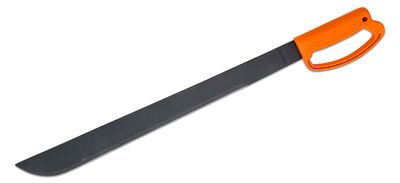
Every spring we're inundated by Russian Olive, blackberry and briars, viburnum and other tangly creeping plants. They come rolling down the slopes. This 22" Ontario is a great tool. Number one asset is its hardness. Even when the edge gets dull, the bevel remains and serves to snap the fibers of the plants. I power through thickets with this and it is even more efficient than my rough bush scythe. More labor with the machete but overall better than the scythe for smashing and severing plants at the knee level. Russian olive is invasive and smothers native plants. I rescued my dogwoods recently with the help of this Ontario 22". Its very hard steel is the key to beating back these plants. I don't have to stop every 25 strokes or so to resharpen. This tool keeps on ticking. But out of the factory box the edge needs lots of work. I repeat, LOTS of work. I wore out a large mill file broadening the final bevel and it took several hours. But once I got the configuration right, this thing never lets me down. Get one. They're cheap and they don't quit. I got the orange D handle. Now I can't lose it when I set it down a moment. Warning: it is HEAVY and you will strain your tendons swinging it hard. I suggest a golf swing approach: put the blade in motion but without force; let its weight do the work. This works very well for me. The handle is tough. I have a 12 inch Ontario w D handle that I use for batoning wood for my woodstove. No problems with the handles coming loose.
 (
(