- Home
- RoseCraft Blades
- RoseCraft Blades Awanata Keychain Slipjoint
Filters
RoseCraft Blades Awanata Keychain Slipjoint
Portions of the following content are served by a 3rd party. If you have accessibility or usability difficulties related to this 3rd party content, please call 800.338.6799.
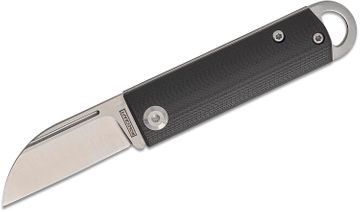
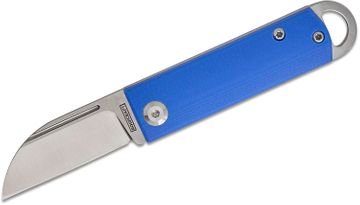
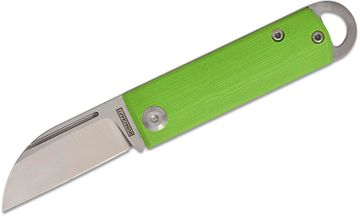
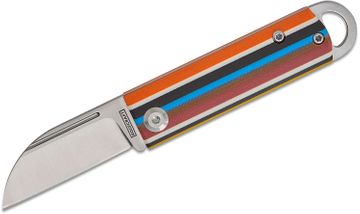
The RoseCraft Awanata folding knife features a 2″ D2 Wharncliffe blade with a long pull and a brushed satin finish, delivering clean cutting performance in a compact profile. Awanata (pronounced uh-wohn-uh-tuh) means “turtle” in the indigenous Miwok language. The name fits perfectly, as the knife’s rounded, compact shape resembles a small turtle when closed. |
|||||
|
4 results
|
|||||
RoseCraft Blades Awanata Keychain Slipjoint Folding Knife 2" D2 Satin Wharncliffe Blade, Black … our price:
$19.99
$19.99
 (1)
(1)Value
Great Value Item
RoseCraft Blades Awanata Keychain Slipjoint Folding Knife 2" D2 Satin Wharncliffe Blade, Blue G… our price:
$19.99
$19.99
 Value
Great Value Item
RoseCraft Blades Awanata Keychain Slipjoint Folding Knife 2" D2 Satin Wharncliffe Blade, Green … our price:
$19.99
$19.99
Value
Great Value Item
RoseCraft Blades Awanata Keychain Slipjoint Folding Knife 2" D2 Satin Wharncliffe Blade, Mexica… our price:
$19.99
$19.99
Value
Great Value Item |
|||||
RoseCraft Blades Awanata FAQ
The RoseCraft Awanata is a compact slipjoint inspired by the shape of a turtle, offering a 2-inch D2 blade in a keychain-friendly format. It features several G10 handle options and a design that prioritizes safety during precision cutting tasks.
What steel is used for the RoseCraft Awanata?
The RoseCraft Awanata series features a 2-inch D2 tool steel blade with a brushed satin finish. This material is selected for its ability to hold a sharp edge and its durability in a small utility folder.
Is the Awanata safe to use without a lock?
The Awanata is designed with a safety-conscious Wharncliffe blade profile where the tip sits below the center line. This geometry ensures that downward pressure during cutting tasks pushes the blade into the open position rather than toward the closing direction.
How can I carry the RoseCraft Awanata?
This series is purpose-built for portability, featuring an oversized loop that accommodates split rings for easy attachment to a keychain. Its small footprint and rounded edges make it an ideal choice for the best keychain knives category.
What handle materials are available for this series?
The Awanata series offers several durable G10 handle options, including standard black, blue, and green, as well as a vibrant Mexican Blanket G10 variant. All models across the series feature the same D2 blade steel and slipjoint construction.
Why is the Awanata named after a turtle?
The name Awanata translates to “turtle” in the Miwok language, referencing the knife's rounded, compact appearance when closed. This ergonomic shape ensures there are no sharp corners to snag in a pocket or on a keychain when not in use.