What is a Butterfly Knife? Learn How To Choose One
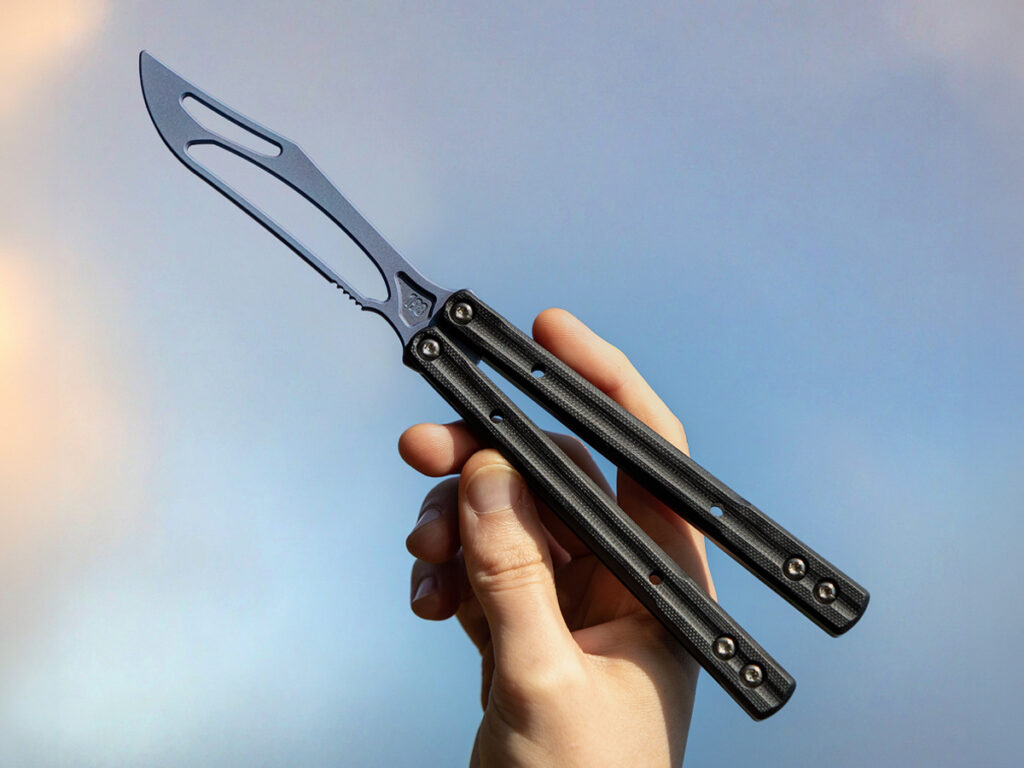
A butterfly knife, also known as a balisong, is a folding knife with two pivoting handles that contain the blade when closed. Unlike traditional folding knives, a butterfly knife requires a practiced technique to open safely and quickly, which has given rise to a huge subculture of balisong “flippers” who perform complex tricks that walk the line between acrobatics and martial arts. The unique handle design of a balisong also allows it to be very strong when open, making it a versatile tool for enthusiasts, collectors, and professionals alike.
Butterfly knives are available in various designs, from utilitarian blades meant for everyday tasks to high-performance models used in martial arts. Due to their unique construction, they require precision engineering to ensure smooth flipping action, durability, and safety. Whether you are a beginner or a seasoned flipper, choosing the right butterfly knife involves understanding its key components and functionalities.
When Was the Butterfly Knife Invented?
The butterfly knife traces its origins back to the Philippines, where it was traditionally used as a utility tool and self-defense weapon. Known as the “balisong,” the knife was crafted by Filipino artisans and became an integral part of Filipino martial arts. Its exact date of origin is unclear, but mass-produced examples in the Philippines go back to at least the early 1900s. Many speculate that early versions of balisongs existed hundreds or even thousands of years previous to this, passed down through generations as both tools and weapons.
The design of the balisong allowed users to quickly deploy the blade while keeping it concealed in a compact form. Over time, butterfly knives gained worldwide recognition as both a functional tool and a skill-based sporting instrument. The 20th century saw their rise in popularity outside the Philippines, with martial artists and collectors embracing the craftsmanship and versatility of these knives.
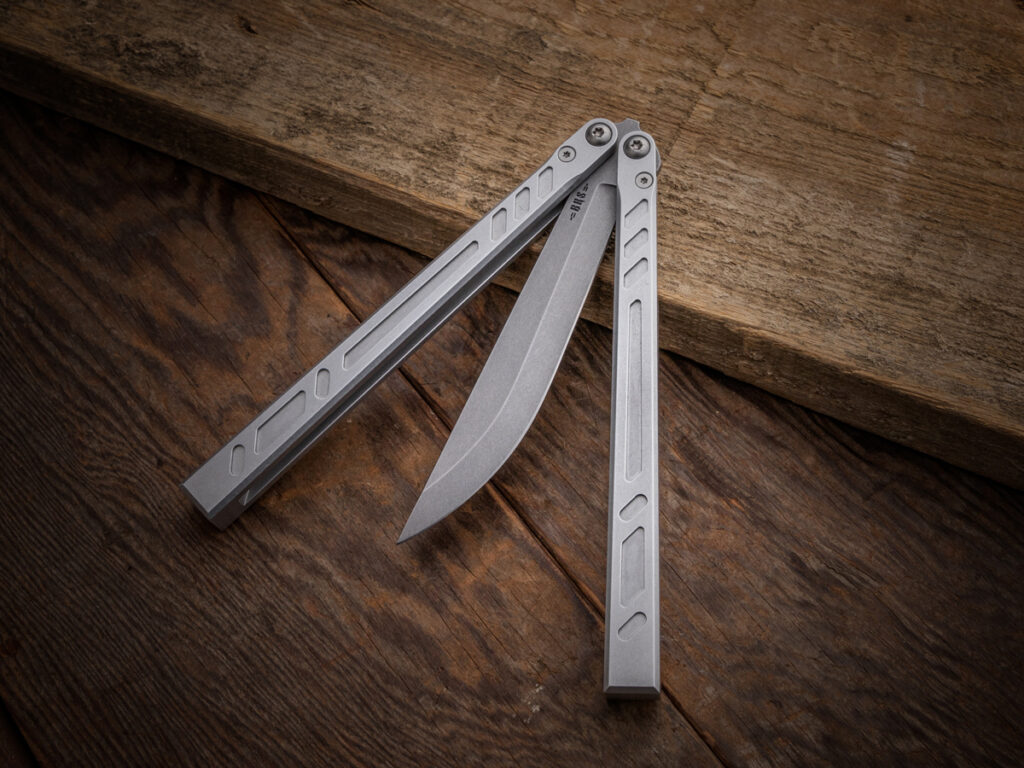
Types of Butterfly Knives
- Blade Styles:
- Tanto – Features a reinforced tip for piercing strength.
- Spear point – A balanced, symmetrical blade good for both piercing and general cutting tasks.
- Clip point – A blade with a concave spine for a sharper, more precise point.
- Drop point – The gently-sloping spine of this blade shape makes it very utilitarian for everyday carry.
- Trainer – A dull-edged blade designed for safe practice.
- Handle Construction:
- Cast – Handles that are molded as a single piece, often Zinc, and found in budget-friendly models.
- Channel-milled – Machined from a solid piece of material, making them stronger, stiffer, more durable (and more expensive).
- “Sandwich” construction – Composed of multiple layers held together with screws, offering easy maintenance and customization.
- Latch Types:
- Standard – A basic manual latch to secure the handles. Swings freely while flipping.
- Spring-loaded – Held in place when open to stay out of the way during flipping. Also allows for easier one-handed opening.
- Magnetic – Similar to the spring-loaded latch, but uses magnets instead of a spring to hold the latch open and closed.
- Latchless – No handle latch at all! Sometimes preferred by high-level flippers who demand perfect balance from their balisong. Must be stored in a sheath or case to stay safely closed.
- Pivot Types:
- Bearings – Ball bearings offer a great balance between low-friction flipping and handle stability. Look for ceramic bearings to minimize the need for lubrication maintenance.
- Bushings – Small, precisely sized cylindrical components that cradle the pivot and hold the handle and blade apart just enough to ensure smooth action. More expensive and time-consuming to make, but offer a uniquely stable, yet smooth flipping experience.
- Washers – Thin rings placed between the blade and handle to reduce friction. Can be tweaked to user preference by adjusting the pivot tension.
How To Use a Butterfly Knife
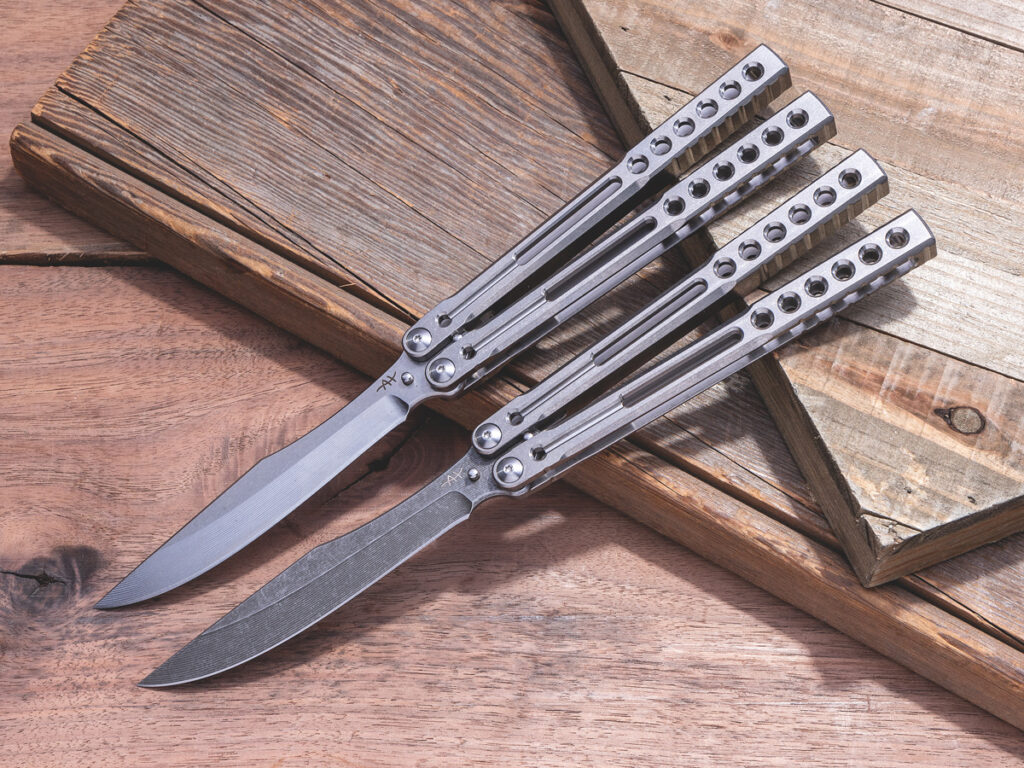
- Grip the Knife Correctly – Hold the safe handle (The one attached to the spine side of the blade, almost always the one without the latch) to keep your hand out of the path of the sharp edge.
- Learn Basic Opening Techniques – Start slow and simple, ensuring safe handling at all times. Establishing good habits early will give you good muscle memory you can build on later.
- Practice Closing the Knife Safely – Like opening, but in reverse. Slow and simple keeps you safe.
- Maintain Control – Always be aware of your surroundings to prevent accidents, and practice in a safe, controlled space.
- Use a Trainer – When you’re ready to try more advanced tricks, consider practicing them with a trainer (unsharpened blade) first to gain confidence.
Why Start with a Butterfly Knife Trainer?
A trainer is a butterfly knife with a dull, unsharpened blade that lets you practice flipping without the risk of cuts. Good trainers match the weight, balance, and dimensions of their live blade counterparts, so the muscle memory you build transfers directly when you’re ready to move to a sharp edge.
Starting with a trainer also helps you develop proper grip habits and control before the consequences of mistakes get real. Once basic opens, closes, and a few aerial tricks feel comfortable and consistent, you’re ready to transition. Many experienced flippers keep a trainer in their rotation permanently for working out new techniques.
Choosing the Right Butterfly Knife
- Look at Trainers First – If you’re just learning how to use a butterfly knife, a trainer is an amazing teaching tool that allows you to practice safely as you build confidence.
- Handle Ergonomics – Look for handles with a comfortable grip, non-slip surfaces, and durable materials.
- Weight & Balance – A well-balanced knife allows for smoother flipping and control. Lighter and smaller knives are faster; heavier and larger ones are slower. There’s no one right answer here—try some different styles to find what feels best for you.
- Pivot Mechanism – High-quality ball-bearing pivots provide seamless movement and longevity, while bushings offer a smoother flipping experience.
- Latch Type – Decide between latchless or standard, spring-loaded, and magnetic latches based on ease of use and personal preference.
- Price vs. Quality – While budget-friendly models exist, balisongs tend to take quite a beating, so investing in a well-constructed knife ensures better performance over time.
What to Expect at Different Price Points
The gap between a $30 butterfly knife and a $300 one is enormous. Here’s what each price range gets you:
- Under $50: Entry-level trainers and basic live blades. Expect cast handles, pin construction, and limited durability. These work for figuring out if you enjoy flipping, but avoid no-name imports with pins instead of screws. They can’t be maintained and develop dangerous handle play quickly.
- $50 to $150: The real starting point for quality. You’ll find stainless steel or aluminum handles, washer pivots, and reputable brands. Most flippers consider this the minimum for a satisfying experience.
- $150 to $350: The sweet spot for serious flippers. Titanium handles, bushing or bearing pivots, and tighter tolerances make a clear difference in flipping feel. This range delivers excellent performance without diminishing returns.
- $350 and up: Premium and custom territory. Hand-fitted components, exotic materials, and limited production runs define this tier. Performance gains over the $150 to $350 range are subtle, but the craftsmanship and exclusivity appeal to collectors and competitive flippers.
If you’re buying your first butterfly knife, the $50 to $150 range gives you a well-built knife that flips smoothly and holds up to regular practice.
How to Maintain Your Butterfly Knife
A well-maintained balisong flips better and lasts longer. These basics will keep yours in top shape:
- Clean the pivots regularly: Dirt and lint build up in the pivot area and create friction. Disassemble the handles periodically and wipe down all contact surfaces.
- Lubricate the pivots: Apply a small amount of pivot oil after cleaning. Use a light oil for bearing pivots and a slightly heavier lubricant for bushing and washer pivots.
- Apply threadlocker to screws: Balisong screws loosen from repeated flipping. A small drop of blue Loctite on the pivot and handle screws prevents them from backing out during use.
- Sharpen the blade: A dull blade is more dangerous than a sharp one because it requires more force and is more likely to slip. Maintain a consistent edge with a quality sharpening system.
- Store it properly: Keep your balisong in a pouch or case when not in use. This protects the blade edge and prevents the handles from getting scratched.
Our guide to knife care and maintenance covers these steps in more detail for all blade types.
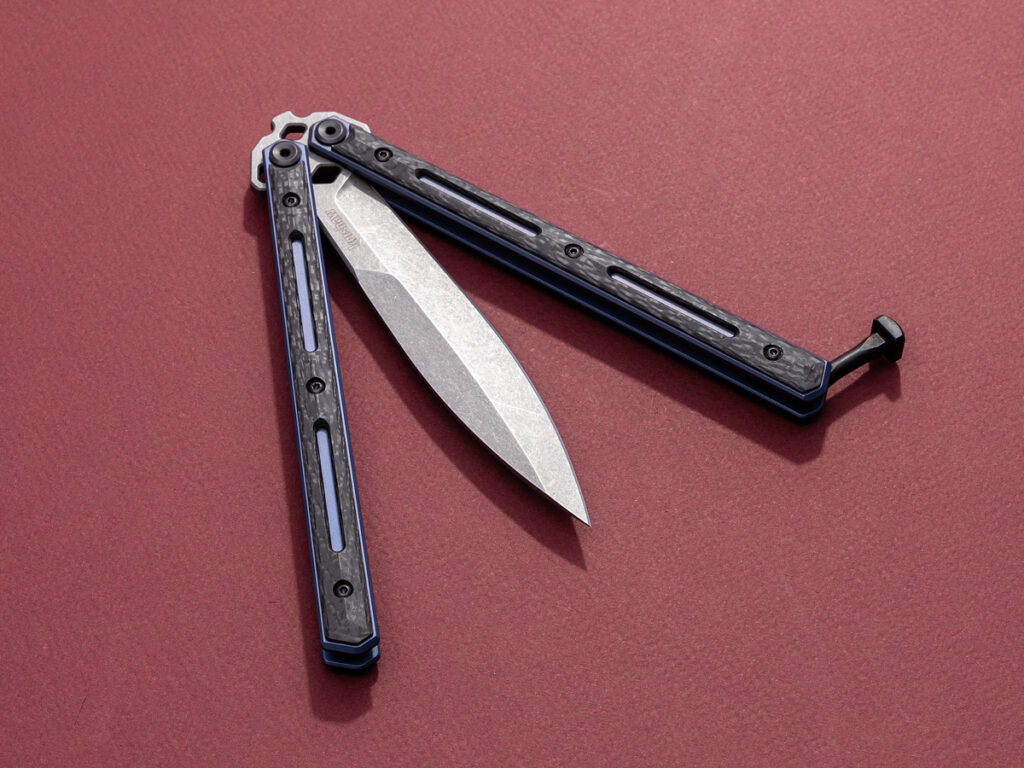
Butterfly Knives vs. Other Folding Knives
- Butterfly Knives vs. Automatic Knives (Switchblades):
- Butterfly knives require manual manipulation to open, whereas switchblades deploy with the press of a button.
- Switchblades and butterfly knives are both more heavily regulated than manual knives, so be sure to check your local laws before buying or carrying one.
- Butterfly Knives vs. Assisted Opening Knives:
- Assisted opening knives use a spring mechanism to aid in blade deployment, making them quicker than balisongs but less skill-intensive.
- Butterfly knives demand greater dexterity but offer a more engaging user experience for flipping and tricks.
- Butterfly Knives vs. Traditional Pocket Knives:
- Typical pocket knives feature a simple folding mechanism with a single handle, offering ease of use and a compact design.
- Butterfly knives provide a unique experience that goes beyond straightforward utility, but they do require more practice to use safely.
What is a Butterfly Knife – Frequently Asked Questions
What is the difference between a balisong and a butterfly knife?
A balisong is the original Filipino term for a butterfly knife; they are the same type of knife.
Which butterfly knife is best for beginners?
A trainer butterfly knife with a dull blade is ideal for beginners learning flipping techniques safely.
What are butterfly knives used for?
They are used for utility cutting tasks, self-defense, flipping tricks, martial arts, and even competitive flipping sports.
How can I maintain my butterfly knife to ensure longevity?
Regularly clean, oil the pivots, and tighten screws to keep your knife in top condition. Storing it properly can also prevent rust and wear.
Are there any competitive sports that use butterfly knives?
Yes, balisong flipping competitions showcase speed, skill, and technique, with trick battles and judged performances.
Can butterfly knives be used as everyday tools?
While primarily a specialty knife, they can be used for everyday tasks like cutting, opening packages, and self-defense where legally permitted.
How much does a good butterfly knife cost?
Quality butterfly knives start around $50 for entry-level models with reputable brands. The $150 to $350 range offers the best balance of performance and value for serious flippers. Premium and custom models can run $500 or more.
What is the difference between a trainer and a live blade butterfly knife?
A trainer has a dull, unsharpened blade designed for safe practice. It matches the weight and balance of a live blade so you can build muscle memory and learn tricks without the risk of cuts. Many experienced flippers keep a trainer on hand for learning new techniques.