One Knife for Everything: What Is the Ultimate Pocket Knife?

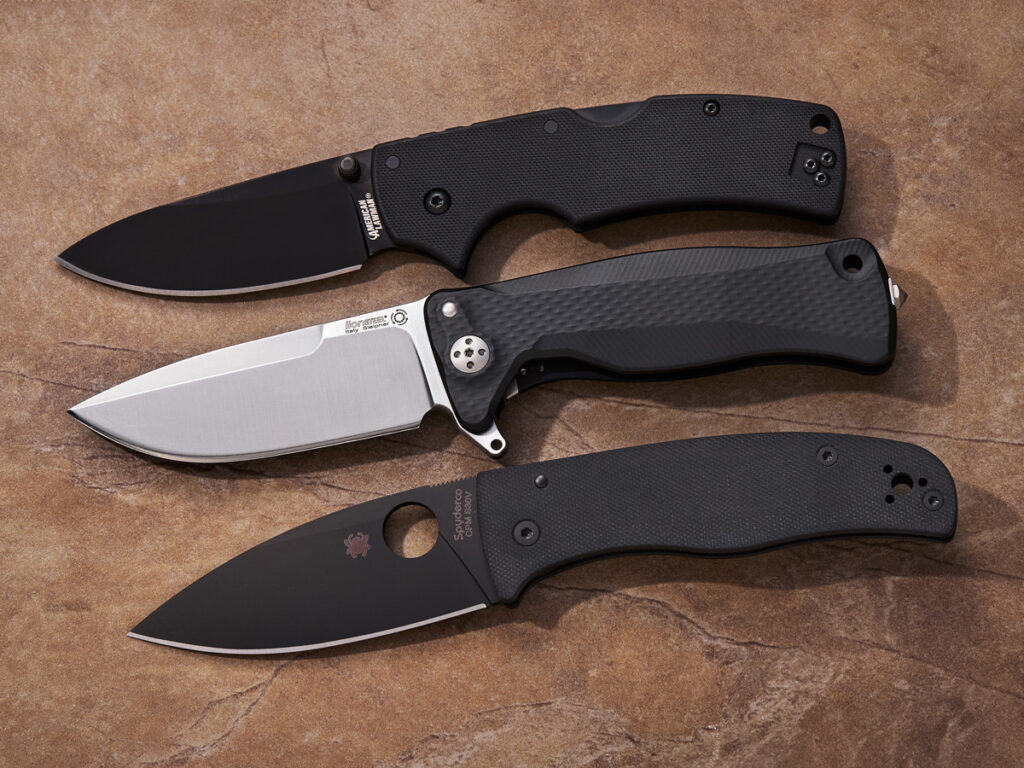
Even a small knife collection affords plenty of options to choose from when it comes to everyday carry. But what if you didn’t have any options at all? If you could only have one knife to do everything—from delicate cutting to hard use—what would you pick? Finding one option that works everywhere from the breakroom to the backwoods is a big ask. The good news is that we’ve found five uncompromising options that feel ready for anything and are built to last a lifetime.
What a “does it all” folder needs to handle
A true one-and-done folder has to live in two worlds. On one side, you want quick access, secure grip, and confidence under stress. On the other, you need a blade shape and edge that make sense for normal outdoor work like carving, notching, and general camp tasks.
That crossover tends to land in what many people think of as a survival-style folder. Not a fantasy “survival” knife, just a practical blend of tactical and outdoor traits. A drop point blade shape usually makes the most sense here because it stays useful across the widest range of cuts. It also keeps the tip strong enough for rougher tasks, while still giving you fine control.
Budget matters, too. Under $250 is “serious knife money” without going into collector pricing. It’s enough to get good steel, solid fit and finish, and a lock that won’t give you problems after years of carry. It also means you can pick based on how it feels in your hand, not just on what’s cheapest.
In narrowing in on our picks, here’s what we focused on:
- A dependable lock that stays tight over time
- A handle that fills the hand, even with gloves or cold fingers
- A blade grind and tip that won’t feel fragile when you need to bear down
- A price that still lets you use it hard, without babying it
Lock types that make sense for long-term reliability
If you’re betting your safety on a folder, the lock deserves as much attention as the steel. In this selection, the emphasis stays on locks that are known for strength and long-term dependability, without relying on extra springs that can wear out.
Three lock styles stand out:
Tri-Ad Lock (Cold Steel)
At a glance, it looks like a lockback, but it’s built to stay strong as it wears. One easy visual clue is the gap you can see between the end of the lock bar and the blade tang. That space exists because a stop pin takes part of the load. The geometry also helps the lock stay solid over time, instead of slowly getting loose after long use.
Compression Lock (Spyderco)
It can look like a liner lock being pushed from the outside, but the lockup is fundamentally different (and better). A tab interfaces into a matching cutout on the blade, which helps it resist different multiple directions of force in real use. You also get finger-safe, one-handed closing, which can matter if you need to keep your other hand free.
Frame Lock (many makers, highlighted here by LionSteel)
A well-made frame lock is simple, strong, and easy to clean out. On top of that, the example below includes a secondary safety that helps prevent accidental disengagement. That extra layer is peace of mind if the knife might see rough handling.
Crossbar (Axis-style) lock
These are usually very reliable, but they use omega-shaped springs. While rare, these springs can break after repeated cycling. On the upside, the lock can still function if one spring fails, and parts can be replaced (or improvised, if you’re determined).
Overall, if you want a folder that lasts, favor locks that stay strong as they wear, and avoid designs that depend on small parts you can’t service.
Five “one-and-done” folders under $250 that fit duty and outdoors
Below are five models that hit the same goal from slightly different angles. The best pick depends on how you prioritize blade length, one-handed operation, handle feel, and extra features.
Cold Steel: Tri-Ad toughness at a great price
Two Cold Steel options fit this role well because they combine hard-use builds with the Tri-Ad Lock.
The first is the Cold Steel American Lawman. It carries a 3.5-inch drop point blade in S35VN, a steel that’s a strong all-around choice for real use. The handle uses slim G10 scales, and the overall profile feels like it can swing outdoors without looking like a dedicated fighting knife. At the same time, the design still gives you what you want for controlled use and safety.
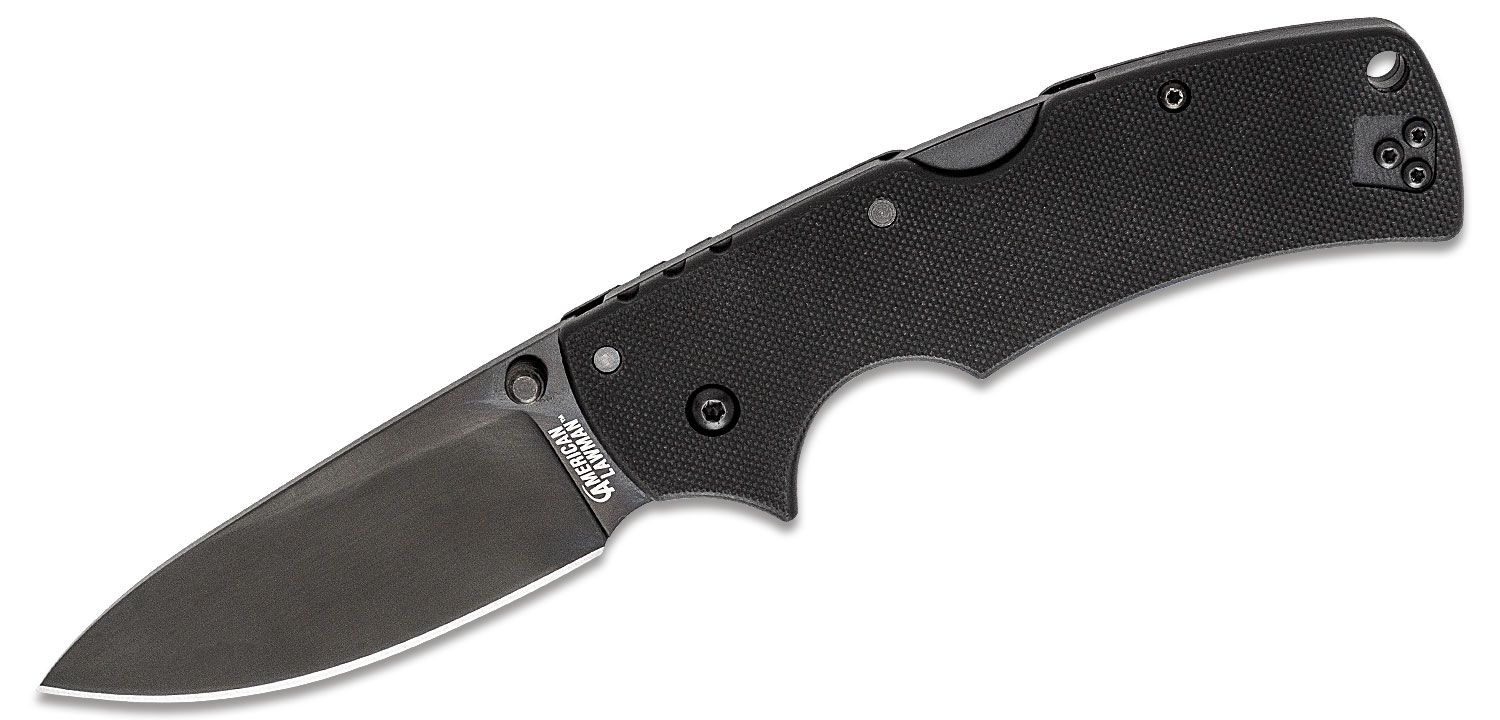
Grip is a big part of why it works. There’s room for a full four-finger hold (even for slightly larger hands), plus an unguarded finger choil that lets you choke up for fine work like whittling and notching. When you move back into a normal grip, you still get enough guard to feel secure. Price is another highlight, it sits around $127, which puts it in “buy it, use it, don’t worry” territory.
Next is the Cold Steel Recon 1. This one steps up to about a 4-inch blade in S35VN, so you get more reach and more blade to work with outdoors. The version discussed uses a clip point, which still works well across both roles. Handle thickness also increases a bit, which can feel more comfortable when you’re pushing into wood during carving cuts.
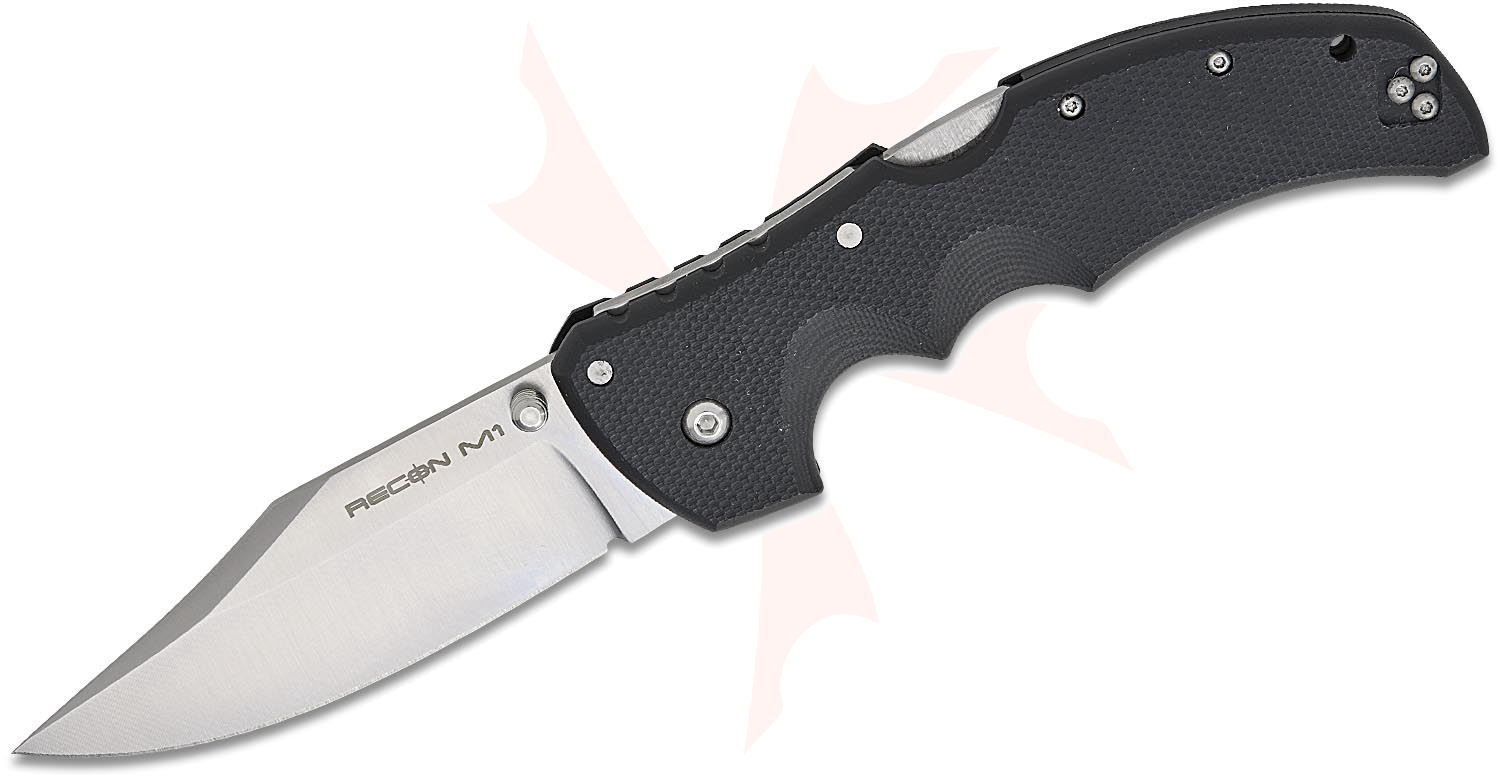
A MagnaCut version exists, but it pushes above the $250 cap depending on the exact model. The S35VN version stays the value sweet spot. Country of origin can be a deciding factor for some buyers, the S35VN versions mentioned here are made in Taiwan, while the MagnaCut version is made in Italy.
Spyderco Bodacious: one-handed control with a durable drop point
If one-handed operation matters, a compression lock folder is hard to ignore. The pick here is the Spyderco Bodacious, which brings a drop point profile that’s geared for general use. The model shown uses blue G10 and Spyderco’s proprietary SPY27 steel, priced around $235.
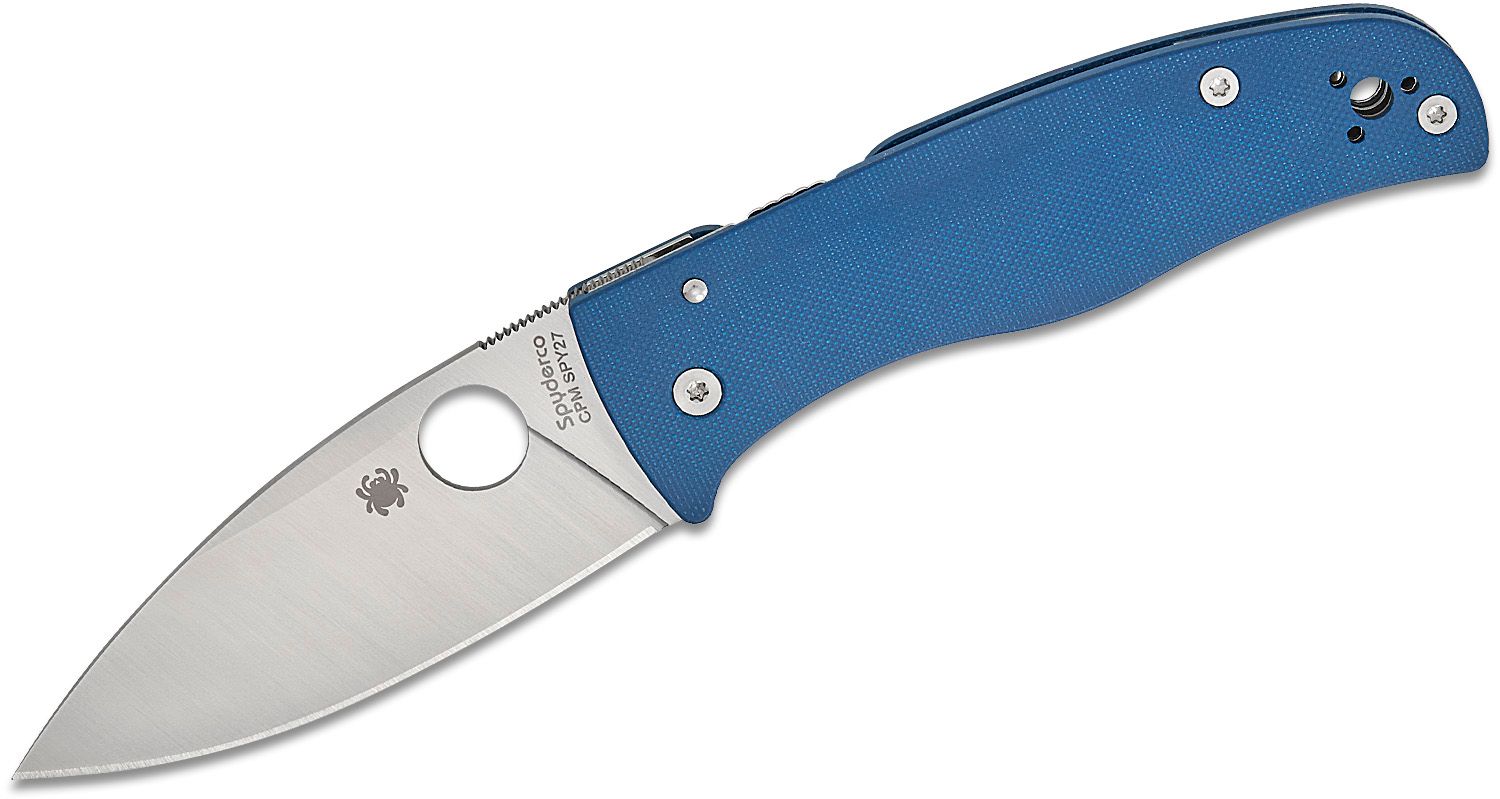
The blade length sits around 3.66 inches, which is long enough to feel capable but still easy to carry. Where it stands out is the grind and tip strength. Instead of a fine, delicate point, the design keeps more thickness along the spine toward the tip. That adds confidence when the knife might see harder contact, or when you’re doing tasks where a fragile tip would be a worry.
Handle length is generous, so you don’t feel cramped. There’s also enough of a finger guard to help you stay planted during harder cuts. Because it uses the compression lock, closing can be finger-safe and one-handed. That can be a real advantage compared to lockback-style designs that often lean toward two-handed closing.
Color and steel options can change the vibe. For a more outdoor-leaning look, there’s also mention of a Spyderco 27 version with blue handles, while the black model keeps the “duty” appearance.
LionSteel SR-11: integral frame lock strength, plus a glass breaker
For a frame lock option that stays well under budget, the LionSteel SR-11 brings a lot to the table at around $182. One standout feature is the integral aluminum handle. That means the handle is machined from a single piece, which supports long-term durability because there are fewer parts and interfaces to loosen over time.
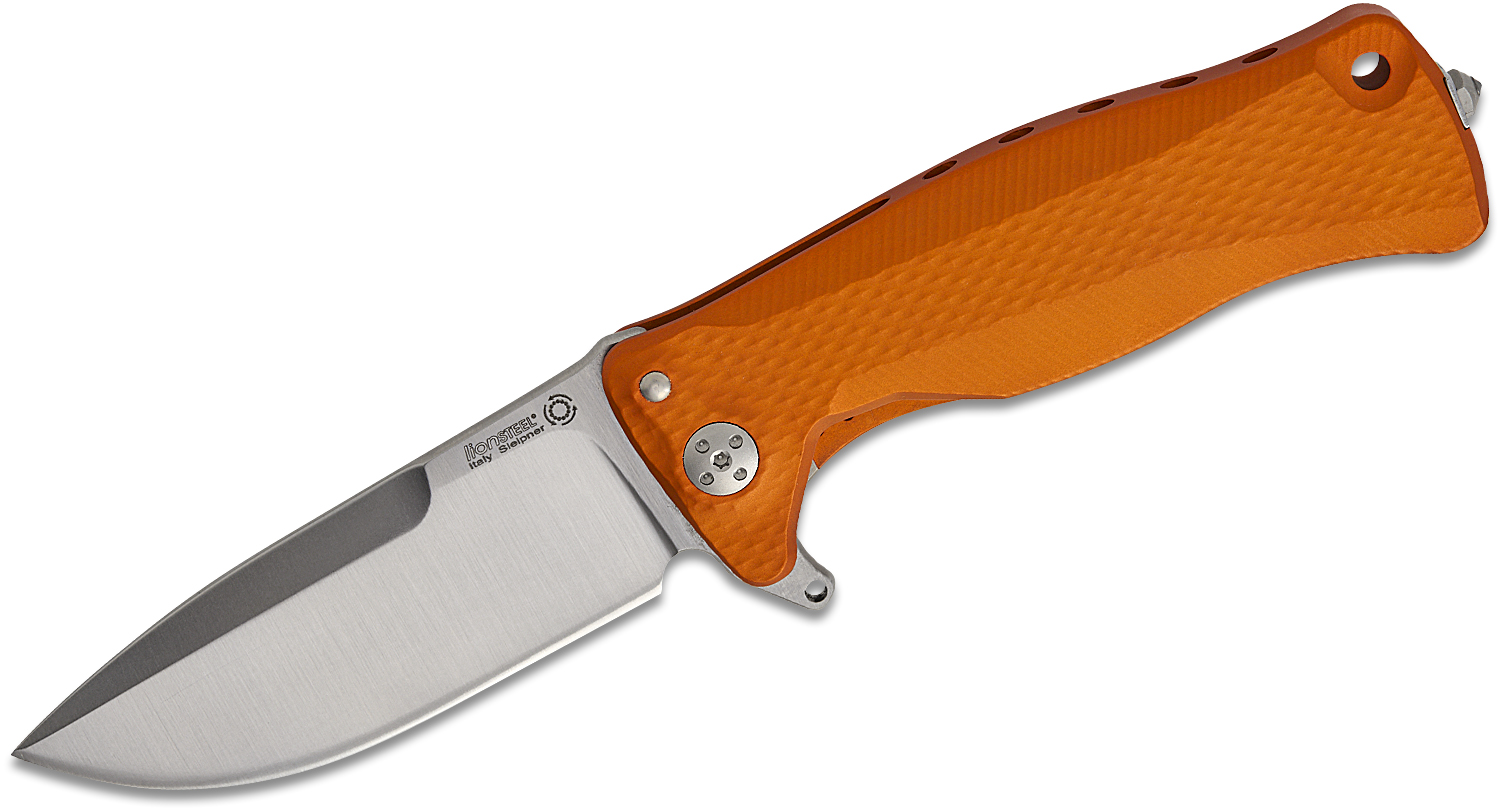
Blade length is about 3.7 inches with a drop point shape and a bit of a swedge, giving the tip a more “pokey” feel when needed. Comfort details matter on a knife you might use for a long carving session, and the crowned spine helps there.
The edge geometry is a key outdoor-friendly detail. It’s described as a flat grind with a convex edge, an “apple seed” style edge that tends to feel durable during wood work. For feather sticks and carving kindling, that convex edge can be a nice fit.
Lockup includes a frame lock plus a secondary safety, called a RotoBlock, which helps prevent the frame lock from being pushed out accidentally. The pivot runs on bearings, and the knife is built to flip smoothly with a solid detent.
As a bonus feature for duty use, there’s a glass breaker at the pommel. None of the other folders in this group include that, so it’s a simple way to add capability without changing what the knife is at its core.
Benchmade Presidio II: a proven big folder with a crossbar lock
The last option uses a different lock style. The Benchmade Presidio II comes in around $200 and pairs a 3.72-inch S30V drop point blade with a roomy handle. In hand, it looks like the kind of knife that fits a lot of users because there’s extra space, without feeling oversized.
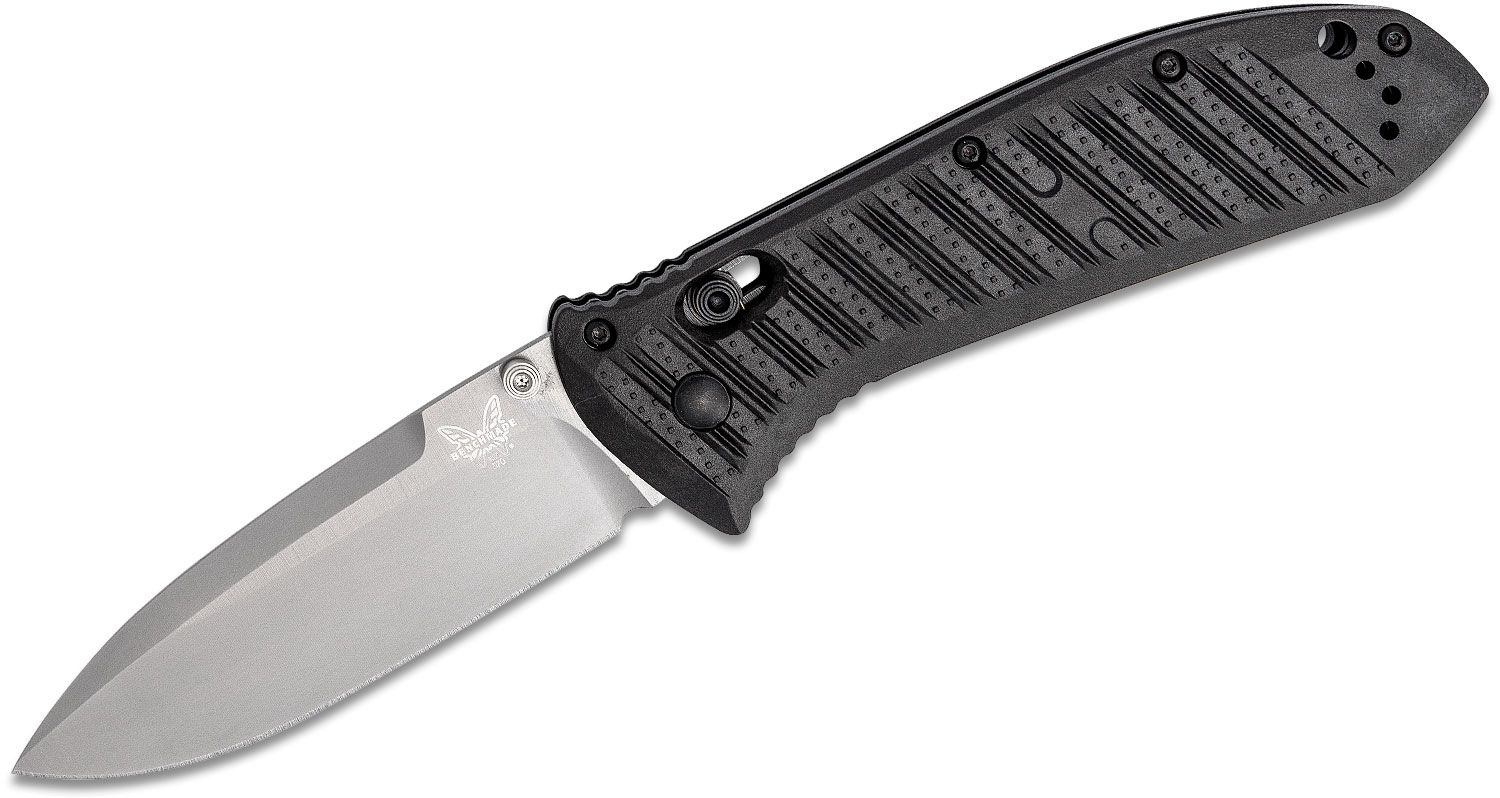
The handle material is CF Elite (a carbon fiber reinforced nylon), which helps keep weight down while staying strong. Full-length steel liners add strength, and overall weight lands just under 5 ounces, which is reasonable for a larger, hard-use folder.
The only caution is the spring-driven nature of the crossbar lock. Omega springs can break. The experience shared here is that it happened only once over many years of carry, so it’s not presented as a constant problem. Still, it’s possible. The bright side is that the knife remains serviceable, and replacement solutions exist (including improvised fixes, if someone is motivated enough).
Quick spec check: price, weight, and carry feel
Here’s a quick side-by-side to help you compare carry weight at a glance.
| Knife | Approx. Weight |
|---|---|
| Cold Steel American Lawman | 4.5 oz |
| Cold Steel Recon 1 | 5.3 oz |
| Spyderco Bodacious | 4.8 oz |
| LionSteel SR-11 | 5.15 oz |
| Benchmade Presidio II | Just under 5 oz |
In other words, they all live in the same general weight class. The American Lawman comes in lightest, while the Recon 1 is the heaviest of the listed specs. For most people, handle shape and pocket carry will matter as much as a few tenths of an ounce.
Closing thoughts: what’s a lifetime folder worth?
A “one-and-done” folding knife is really a mix of lock confidence, comfortable grip, and a blade shape you’ll keep reaching for. Any of the five options above can make a strong case, depending on your priorities. If you want maximum value with a tough lock, the Tri-Ad models stand out. If one-handed close matters, the compression lock earns its keep. If you like simple strength and extra safety, the SR-11 is hard to ignore.
The bigger question is personal: how much would you pay for one knife you plan to carry for years, and what design features make it feel like “the one” instead of just another folder?