The Very Best Pocket Knives of 2025

Thousands of new knives crossed our desks in 2025, and we spent the year handling, carrying, and talking through what actually stood out. By the end, we ended up with a group of standouts that hit different notes – overbuilt hard-users, refined minimalist carries, serious budget surprises, and a few designs that felt like real statements from their brands. In no particular order, these are the folders we kept coming back to, for personal excitement and for what they signal about where the industry is going.
Quick view: the folding knives we picked for 2025
| Knife | What it is | What stood out |
| Zero Tolerance 0044 | Premium button-lock flipper | Button-lock action that can go toe-to-toe with the Malibu |
| Zero Tolerance 0203 | Big, overbuilt crossbar | Washers (not bearings), 4-inch M4, “classic ZT muscle” feel |
| North Mountain Blade BBNM | Tactical-inspired production folder | Stays true to its heritage, solid and honest |
| SRM 258L Terrier | Budget value folder | Sanmai-style laminated blade, smart manufacturing, tool-free clip swap |
| Boker Kihon Bifold | Slim, German-made folder | MagnaCut plus folded-steel-frame style, executed with modern precision |
| SRM 251MB Twin | Compact, detail-heavy design | Fully concealed blade when closed, buried “lighter wheel” style opener |
| Kershaw Launch Iridium | USA-made automatic | MagnaCut, aluminum, fast and authoritative action |
| Remette RT-Meteor | Premium titanium folder | Button-actuated frame lock with finger-safe closing |
| Roxon FLEX Companion | Modular multi-tool | Open-source, fast-swappable implements, one-handed access to tools |
| BIGiDESIGN The Overlook | Minimalist premium EDC | Quiet details, refined lock feel, restrained design choices |
| Buck Range | Modern Buck flagship feel | Thin blade stock, excellent execution, strong sign for Buck’s future |
Top folding knives of 2025
Zero Tolerance 0044 and 0203 (tie)
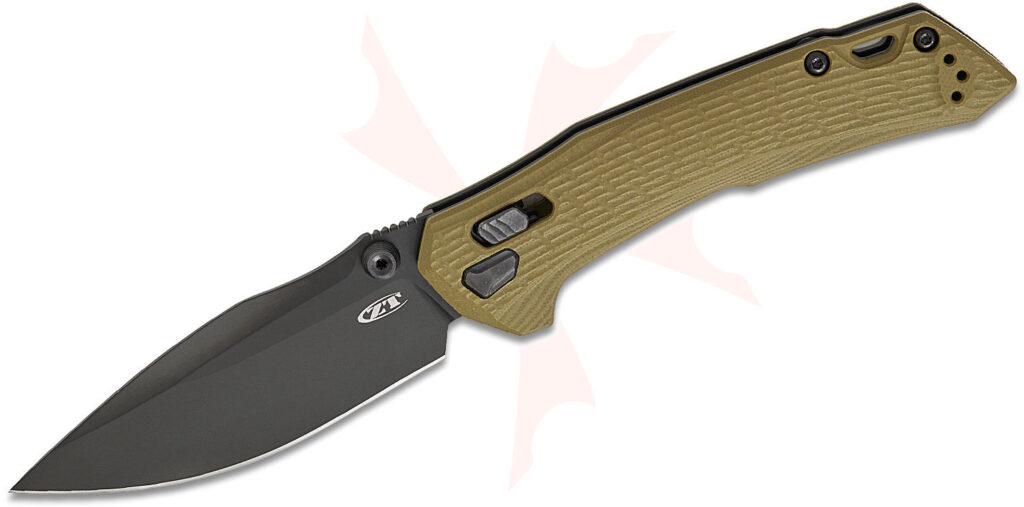
- Why we picked them: Together, they feel like a clear message about where ZT is headed.
- ZT 0203 highlights: A return to that big, overbuilt vibe that made ZT’s name, with a 4-inch M4 blade and a finely tuned crossbar lock running on washers (not bearings).
- ZT 0044 highlights: A 3.2-inch S45VN blade, titanium handles, and a clean design that carries easier for most people.
- The real headline: The 0044’s button-lock flipper action has that “solid” feel that separates the best button locks from the rest.
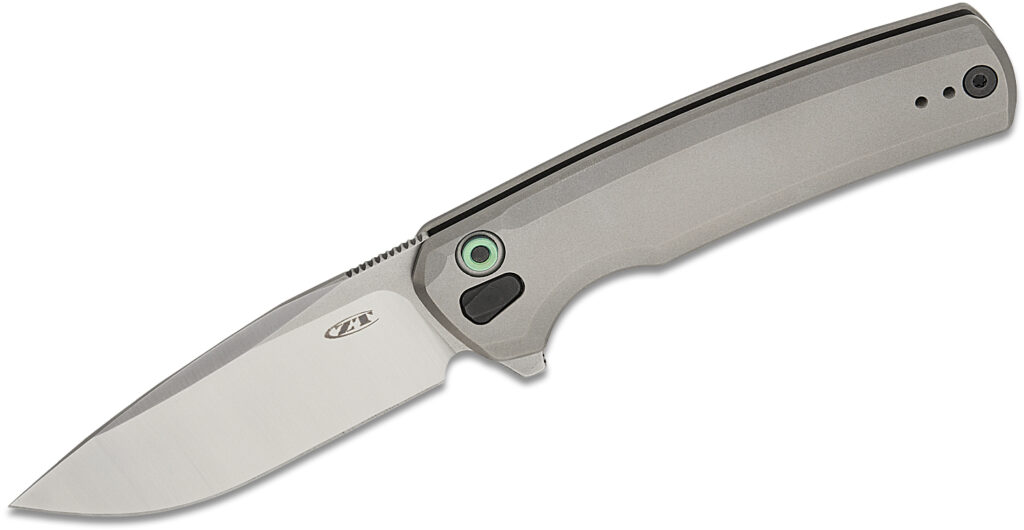
A lot of button-lock flippers feel fast and silky, but not all of them feel mechanically precise. The 0044 does, and that’s why it earned the comparison to the Pro-Tech Malibu. It’s one of the first knives we’ve handled that truly hangs in that same benchmark tier.
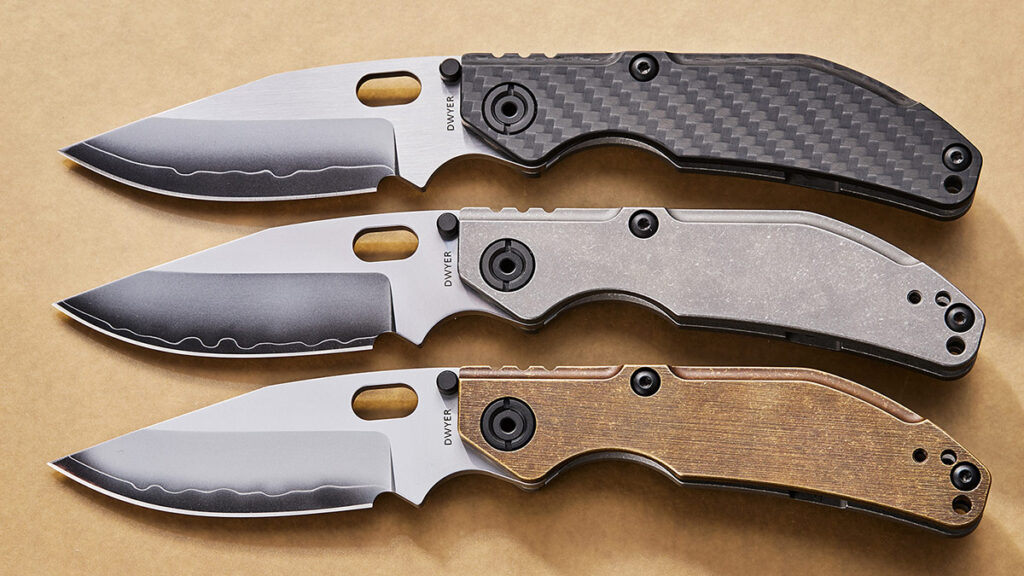
North Mountain Blade BBNM (Dwayne Dwyer design)
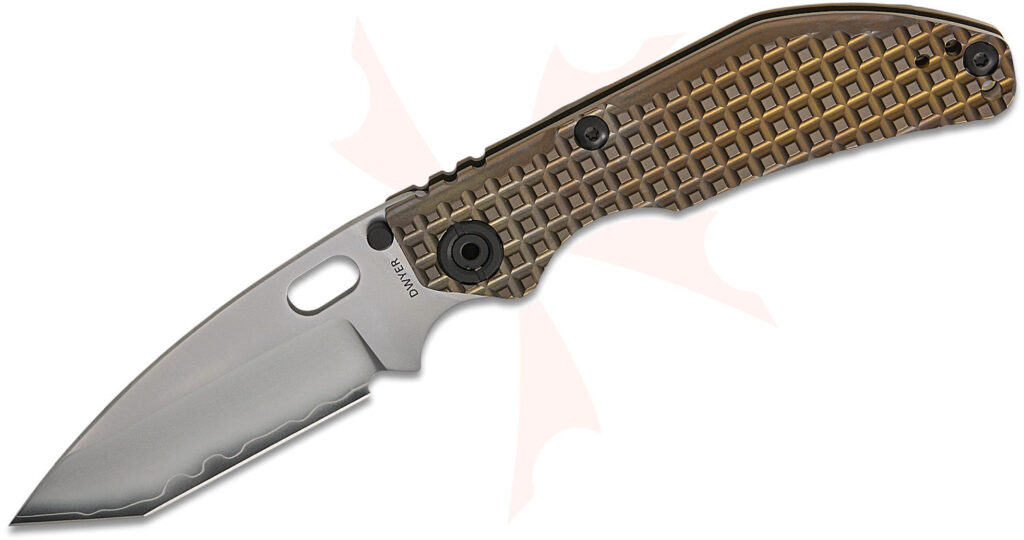
- Why we picked it: It brings an iconic design lineage into a more reachable, production-ready package, from an authentic designer.
- What it isn’t trying to be: It doesn’t chase the thinnest, flickiest, drop-shut trend.
- What it feels like: Solid, purposeful, and closer in spirit to the customs that inspired it.
- Brand signal: North Mountain Blade looks like a brand to watch, with strong quality and a point of view.
We also liked that it stands apart from the “sea of great knives” by refusing to sand off the edges of its personality. If another OEM built it, it might have ended up thinner, on bearings, tuned for maximum fidget. North Mountain didn’t go that route, and we remembered it because of that.
SRM 258L Terrier
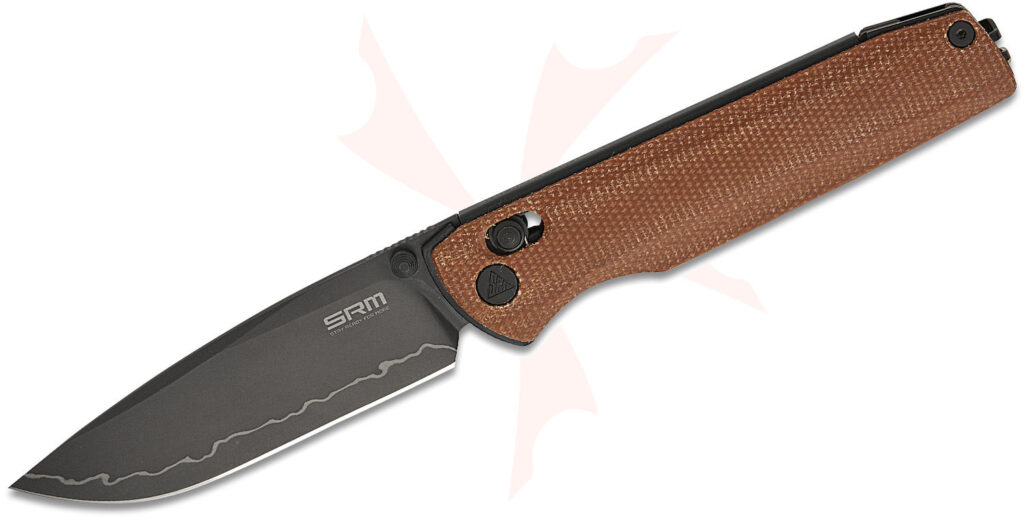
- Price zone: Around the mid-$60 range.
- Blade construction: Laminated San Mai-style build, with 14Cr as the core steel (with SRM claiming performance in the S30 range).
- Build choice that matters: A folded steel frame, which keeps things strong and keeps cost down.
- Design feel: Narrow in-pocket carry, but still a 3.5-inch drop point with an all-around profile.
- Standout feature: A tool-free, reversible pocket clip that swaps sides without tools.
This was one of those “how is it this good for the money?” knives. It also fit a theme we noticed all year: budget knives didn’t just get cheaper, they got better made and better designed. For us, that’s exciting because it changes what “entry-level” can mean.
Boker Kihon Bifold
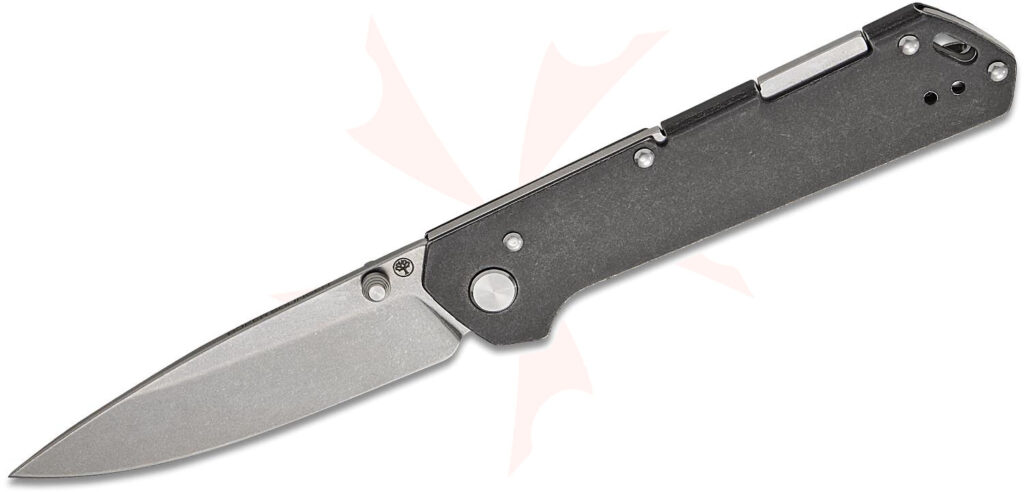
- Price zone: Just over $100.
- Big deal feature: A MagnaCut blade paired with a slim steel frame construction.
- Why it’s interesting: It’s a modern, precise take on an old folded-frame style that used to be sturdy but not exactly “precision.”
- Execution note: Centering and fit feel far more exact than you’d expect from this style.
- Made where it matters: Produced in Solingen, Germany, in the Boker factory.
We also appreciated that it comes in variants that reflect German legal requirements, including versions without one-hand opening hardware. The bigger story is that we’re seeing traditional construction methods come back, but with modern manufacturing tightness.
SRM 251MB Twin
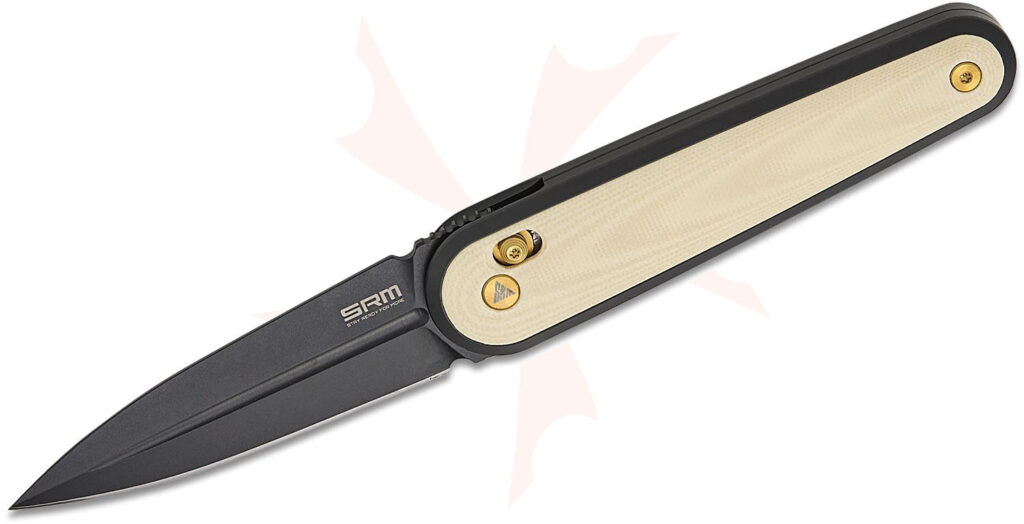
- Why we picked it: It feels like a new ceiling for SRM, not just “another good cheap knife.”
- Closed profile: The blade is fully concealed when folded.
- Deployment options: Crossbar lock fling-open, or thumb and flip-open using a clever chamfer that exposes jimping.
- Signature detail: A buried “lighter wheel” style opener that doesn’t stick out, but still works.
- Design payoff: Symmetry, lots of machining time in the handles, and inlays that taper toward the pivot.
This one is packed with small design decisions that add up to a knife that feels more expensive than it is. It also has something many “hidden flipper” designs struggle with: you can slow-roll it open smoothly, not just snap it.
Kershaw Launch Iridium (USA-made automatic)
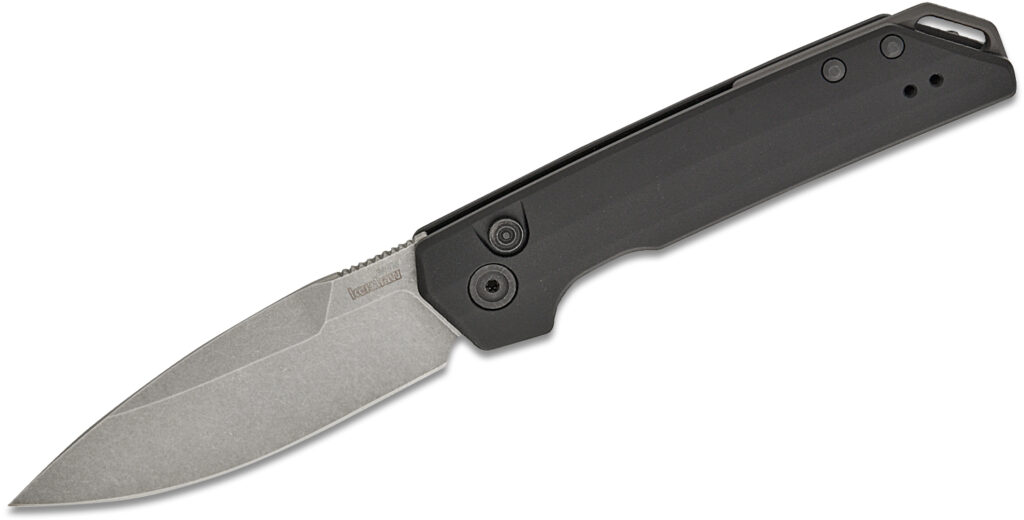
- Why we picked it: A popular design, proven in imports, now landing as a successful USA-made auto.
- Materials: MagnaCut blade, aluminum handles.
- Price zone: Around the high-$100 range for a USA-made automatic in MagnaCut.
- Action: Fast, snappy, and authoritative, in the way Launch autos are known for.
- Design note: It hints at stiletto vibes without giving up drop point utility.
We liked the balance here: it has the style people want in an auto, but it still reads as a real user. It’s a drop point that doesn’t feel generic, helped by the swedge and the overall blade geometry.
Remette RT-Meteor
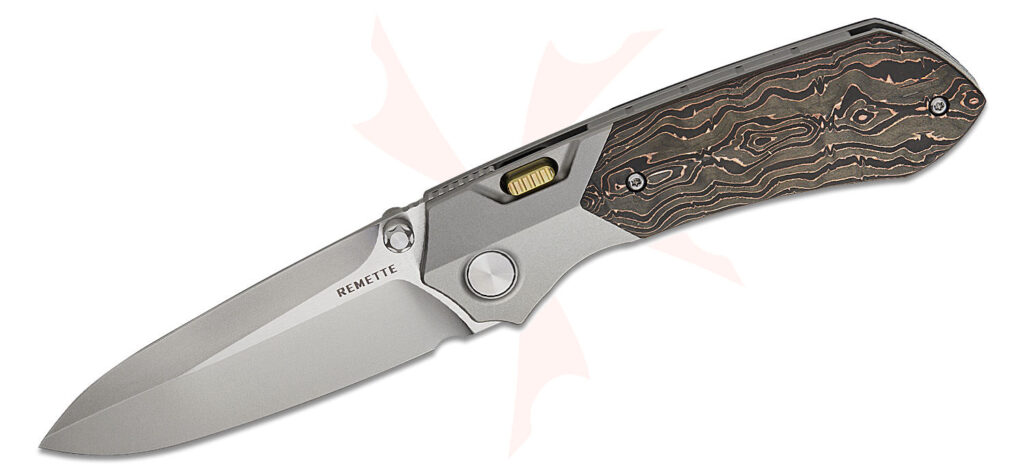
- Why we picked it: It broke through the noise of “flicky titanium frame locks” by doing something genuinely interesting.
- Locking setup: A button-actuated frame lock that can close in a finger-safe way like a button lock.
- Materials: M390 blade, titanium handles, with copper carbon fiber inlays on the example we handled.
- Carry and fit: A neutral handle shape that works for a wide range of hand sizes.
- Blade vibe: Drop point utility with a subtle spear or dagger-like feel near the tip.
It also has a front flipper, even though we’re not always front flipper people. The point is you don’t have to use it. With thumb studs available, it’s easy to choose your preferred opening method and ignore the rest.
Honorable mention: Remette RT-Woodpecker
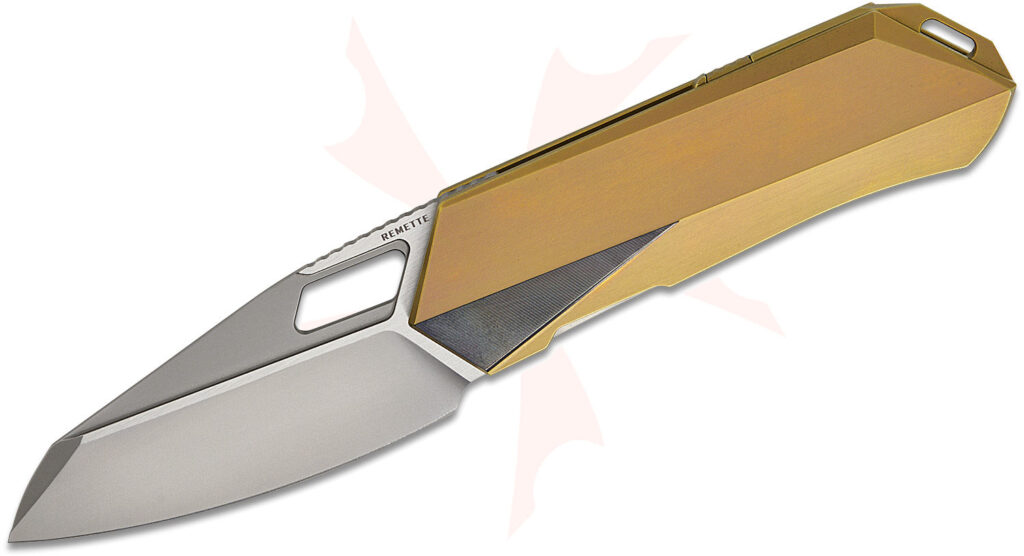
- Why it caught our attention: Tool-free disassembly aimed at a cleaner exterior with no visible screws.
- How they did it: Spring-loaded latches that lock the knife together tightly enough to avoid movement during use.
- Why it matters: They didn’t just repeat one mechanism across models, they approached each design from scratch.
Even as an honorable mention, it showed a brand having fun and pushing aesthetics and mechanics at the same time.
Roxon FLEX Companion (modular multi-tool)
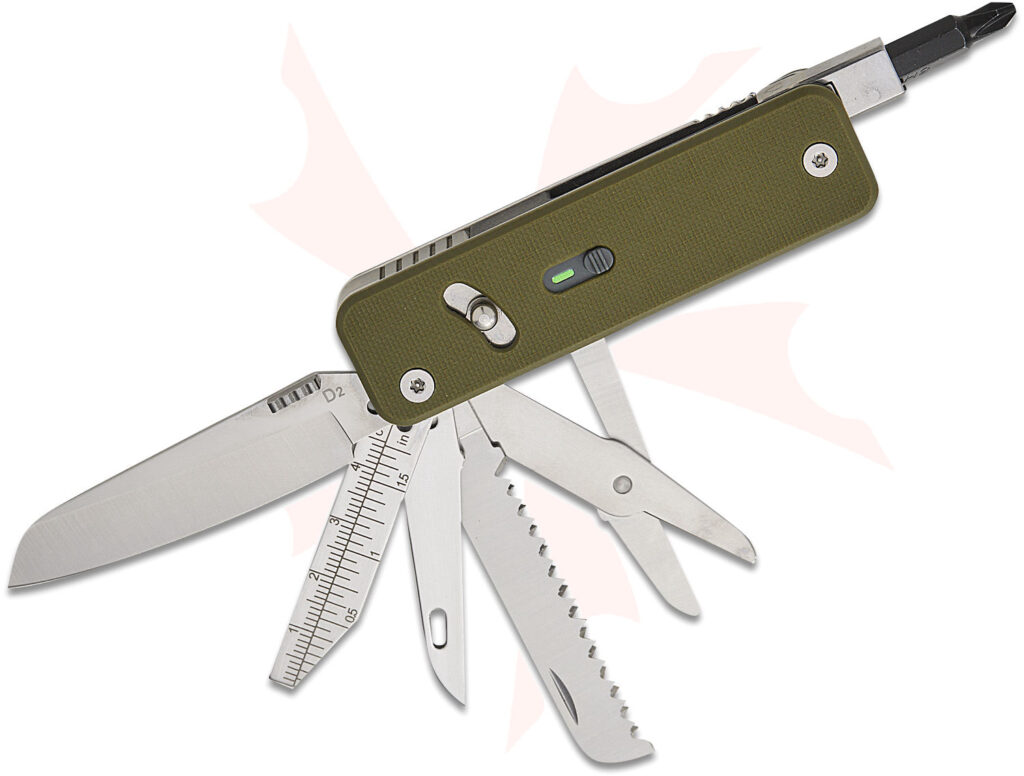
- Why we picked it: It’s an important idea executed in a practical way, not just a novelty.
- Core concept: Interchangeable implements that swap quickly without screws.
- Open-source angle: The system is opened up so others can make and sell implements.
- What it competes with: It’s not trying to be a Leatherman clone, it’s closer in spirit to a Swiss Army knife.
- Tradeoff: A little tolerance play comes with modularity, but it doesn’t block real use.
The control lever is also well thought out, and it does three jobs without feeling fussy.
- Kick-out access: Helps you fan tools out for one-handed selection.
- Unlocking: Releases the tool when you’re done.
- Swapping: Fully releases the implements for fast changes.
BIGiDESIGN The Overlook
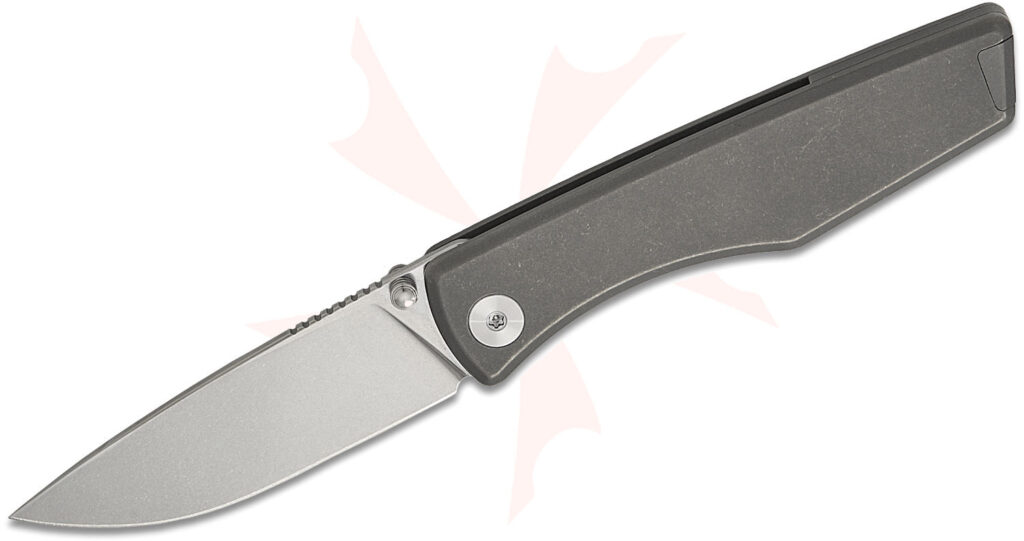
- Why we picked it: Simple, premium, and confident enough to stay simple.
- Materials: M390 and titanium, around the low-$200 range.
- Personality: Easy to dress up or down, it can read like a gentleman’s knife or a daily jeans carry.
- Details that matter: A single-screw pocket clip attachment from the back, pulling double duty by also holding the handle assembly.
- Feel detail: Ceramic ball lock bar interface (a Chris Reeve-style idea) with a refined engagement feel.
We don’t see many brands in this price range willing to be this restrained. Here, the interesting parts aren’t loud, they’re the quiet “oh, that’s clever” details you notice after handling.
Buck Range
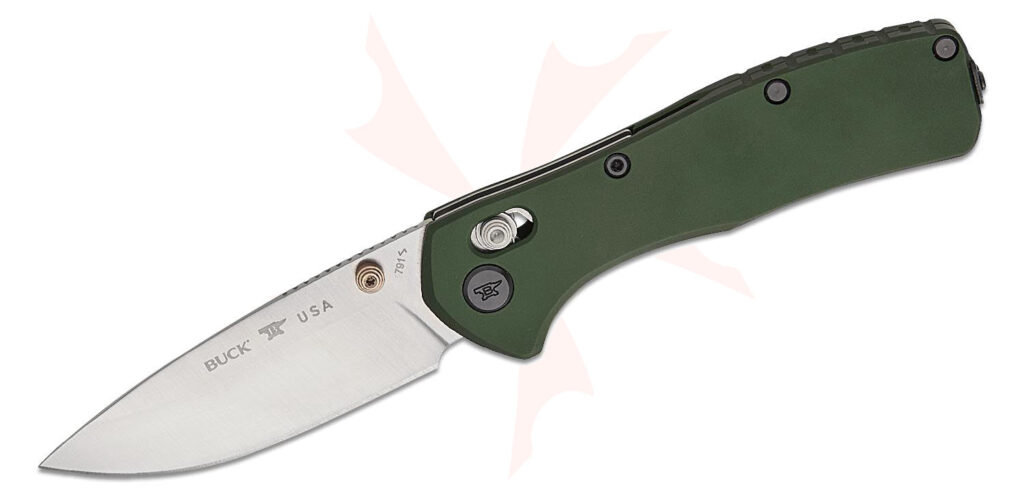
- Why we picked it: If we had to name one folder that best signals the future, this was it.
- Bigger meaning: It’s not riding on the 110’s shadow, it stands on its own.
- Performance feel: Thin blade stock that cuts like you want it to.
- Handle and clip: A distinctive handle build with a tail-mounted clip on higher-end versions, carrying a thread of Buck heritage.
- Variants mentioned: A premium version with MagnaCut and aluminum (around the low-$200 range), plus a more affordable 154CM version with injection-molded handle construction.
One detail we kept coming back to is that the more affordable version can be “better” in at least one real way, comfort. Injection molding let Buck add shape to the handle that would cost more in aluminum, and that ergonomic shaping pays dividends for in-hand comfort.
Conclusion
We walked away from 2025 feeling like the floor rose more than the ceiling. That’s a good thing for anyone buying and carrying knives, because it means more great options at more prices. If we had to sum up the year in one line, it’s that there was no single winner, but there were a lot of knives worth remembering.
If you want to compare specs, variants, and pricing on everything we covered, browse the full lineup through KnifeCenter’s online catalog. If you’ve carried any of these, we want to hear what held up and what didn’t.